Driveway Repair vs Replacement: How to Decide
Most damaged driveways fall somewhere between 'needs a repair' and 'needs to come out' — and the right call depends on what's actually wrong underneath, not what the surface looks like. This guide walks through how we decide between driveway repair and replacement so you can tell which one your driveway needs before you spend a dollar.
The Honest Answer
It Depends on What's Underneath
The choice between repairing and replacing a concrete driveway comes down to one question: is the base underneath still solid, or has it moved? Surface damage — cracks, spalling, a worn finish — can be fixed without tearing anything out. But when the ground under the slab has settled, washed out, or shifted, no repair stays put for long, because the slab keeps moving the same way it did before.
That's why two driveways with similar-looking cracks can need completely different fixes. One might have hairline cracks over a solid base that seal up and hold; the other might be cracking because the base is failing underneath, and sealing the cracks just hides the problem until the slab breaks through. The difference is what we look at when we walk your driveway — and it's what this guide breaks down so you know what to expect before we get there.
What We Look At
The Five Things That Decide It
Base Condition
Whether the ground under the slab is solid and compacted or has settled, washed out, or shifted. A failed base is the #1 reason a repair won't hold.
Crack Pattern
A few isolated surface cracks seal fine. A web of connected cracks, or cracks that line up with dips and settling, usually mean the slab is moving.
Settling & Heaving
If the driveway has dropped or lifted in sections, we check whether the slab is intact or cracked through — that tells us if leveling will hold or if it needs replacing.
Age & Wear
An older driveway near the end of its life with widespread surface damage often makes replacement the better long-term call than repeated repairs.
Drainage
Water pooling against or under the slab erodes the base. If drainage is the root cause, fixing it has to happen with whatever repair or replacement we do.
When Repair Makes Sense
Repair Is Right When the Base Is Good
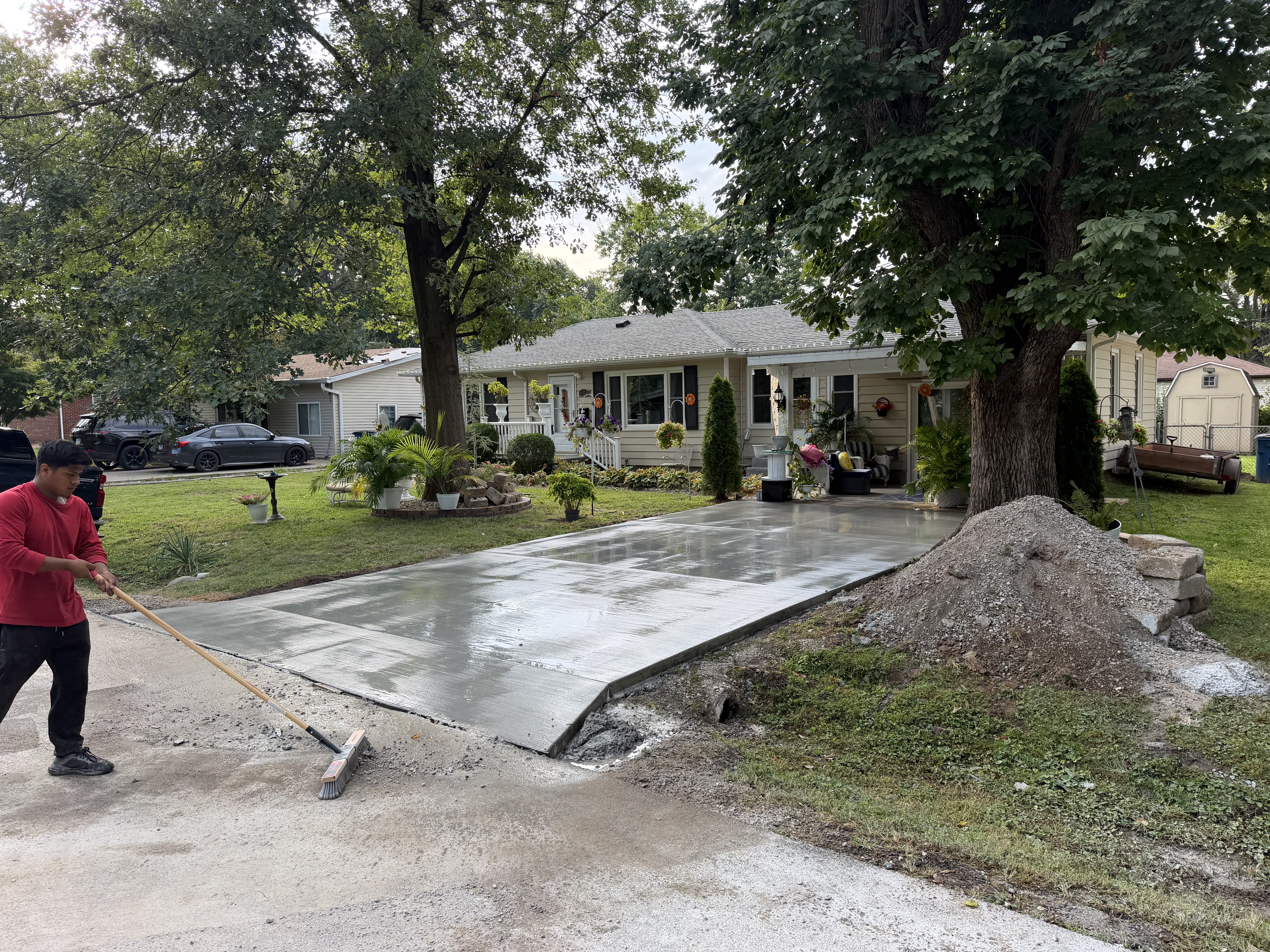
A repair holds when the damage is at the surface and the slab underneath is still level and solid. Hairline cracks, minor spalling where the top has flaked, a single section that's settled but stayed intact — these are the cases where a targeted fix buys you real years, not just a season.
Crack sealing stops water and salt from widening a crack through the winter. Spalling repair restores a flaked surface when the concrete beneath is sound. And leveling lifts a settled-but-intact slab back to grade. None of these require tearing the driveway out, and all of them last when the base is doing its job.
When Replacement Is the Fix
Replacement Is Right When the Base Has Moved
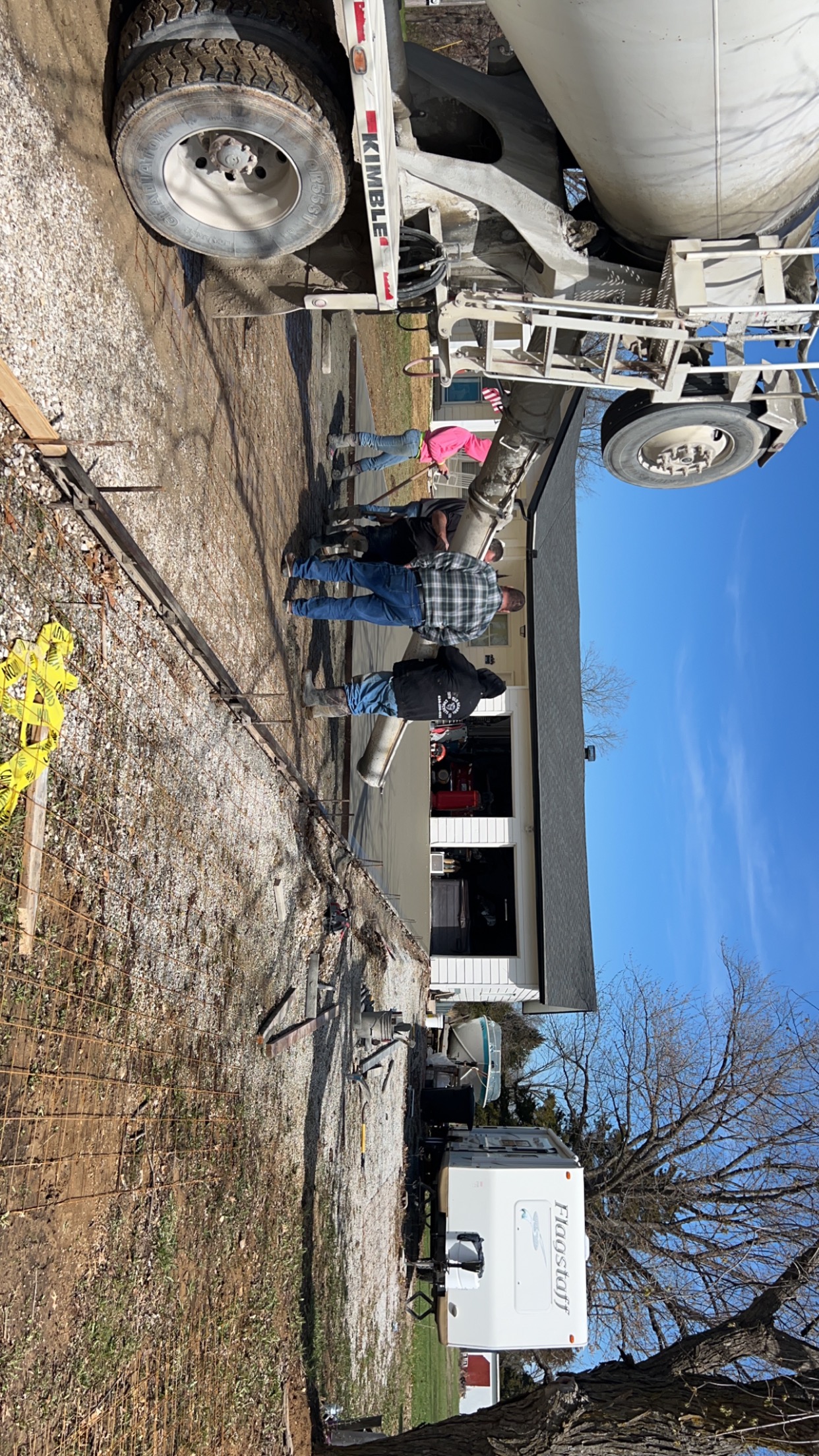
When the slab has broken into pieces, settled unevenly across its length, or cracked through where the base has failed, a repair just delays the same outcome. Replacement is the lasting fix because we tear out the failed concrete, correct the base underneath, and pour a new slab with control joints placed where the driveway actually wants to move.
That's the part a repair can't do — fix what's underneath. If your driveway keeps cracking in the same spots every winter, the base is telling you it needs replacing, not repairing. We'll show you exactly what we see and why before you decide.
Before You Call
How to Tell On Your Own
- Walk the slab and look for uneven sections — a driveway that's no longer level has likely settled and the base may be failing.
- Check whether cracks line up with dips or low spots — cracks that follow settling usually mean movement underneath, not just surface wear.
- Look for cracks that run all the way through the slab — through-cracks mean the slab has broken, and sealing won't hold it together.
- Watch where water goes after a rain — pooling against or on the slab erodes the base and shortens any repair's life.
- Count how many times you've patched the same area — repeated repairs in the same spot are a sign the real problem is underneath.
Questions & Answers
Repair vs Replacement FAQ
The questions homeowners ask before deciding which way to go.
Can I repair a driveway that really needs replacing?+
You can patch it, but a repair on a driveway with a failed base or widespread settling won't hold — the new surface cracks the same way within a season or two. We'll tell you honestly when a repair is throwing good money after a bad slab.
How many cracks are too many to repair?+
It's less about the count and more about the pattern. A few isolated surface cracks seal fine; a web of interconnected cracks, or cracks that line up with settling, usually points to base movement underneath — and that's a replacement.
Does a settled driveway have to be replaced?+
Not always. If the slab is intact and just dropped, leveling can raise it back. But if it's cracked through or settled unevenly in sections, replacement is the lasting fix because the base underneath needs correcting.
Should I repair now and replace later?+
If the base is sound and the damage is surface-level, a repair buys you real time. If the base is failing, repairing just delays the same outcome — and you end up paying for the repair and the replacement. We'll tell you which side of that line you're on.
Related Services
Driveway Services We Pour
Ready to move forward? These are the driveway services we handle across Troy and the Metro East.
YOUR PROJECT STARTS HERE
Tell us about your project today for a free estimate. Straight answers, real numbers — we look forward to working with you.
Get a Free Estimate
Tell us about your driveway project and Jacob will get back to you within 24 hours.